Many applications require a synchronized time base.
Due to its precision and robust encoding, the GPS / GNSS signal provides a highly reliable time reference.
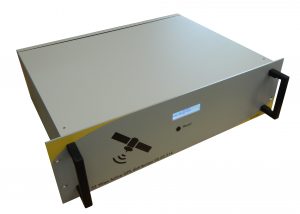
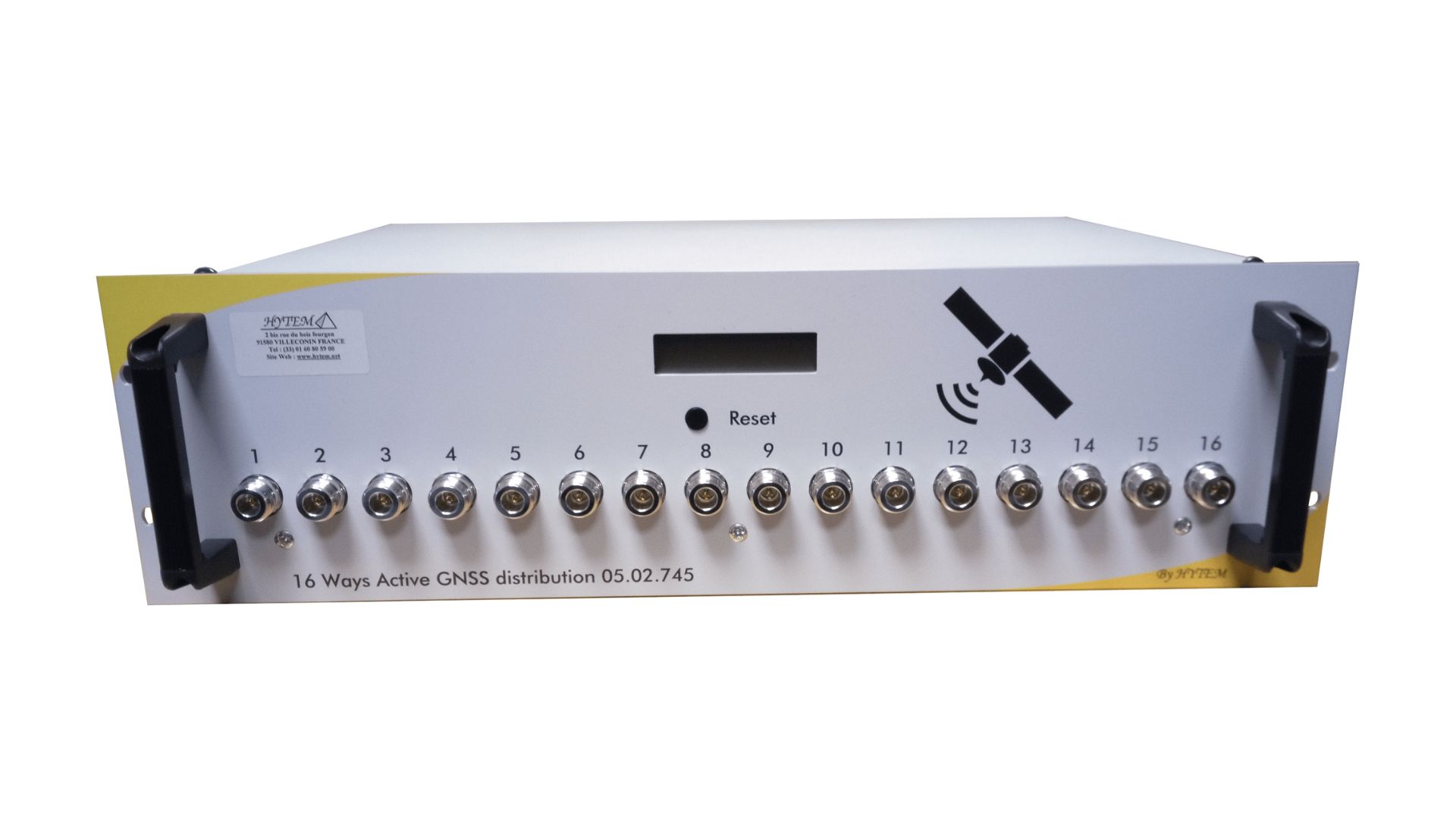
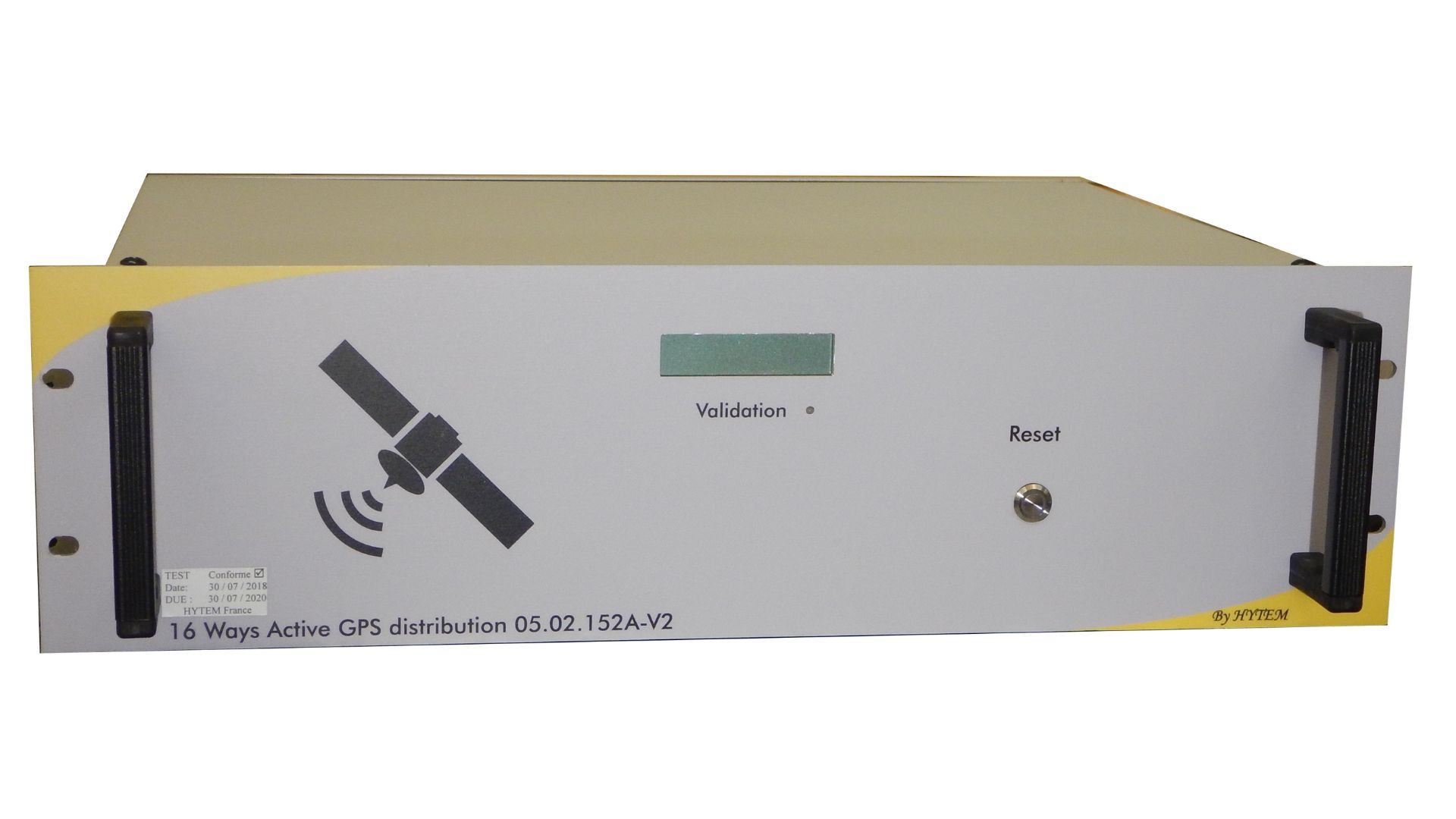
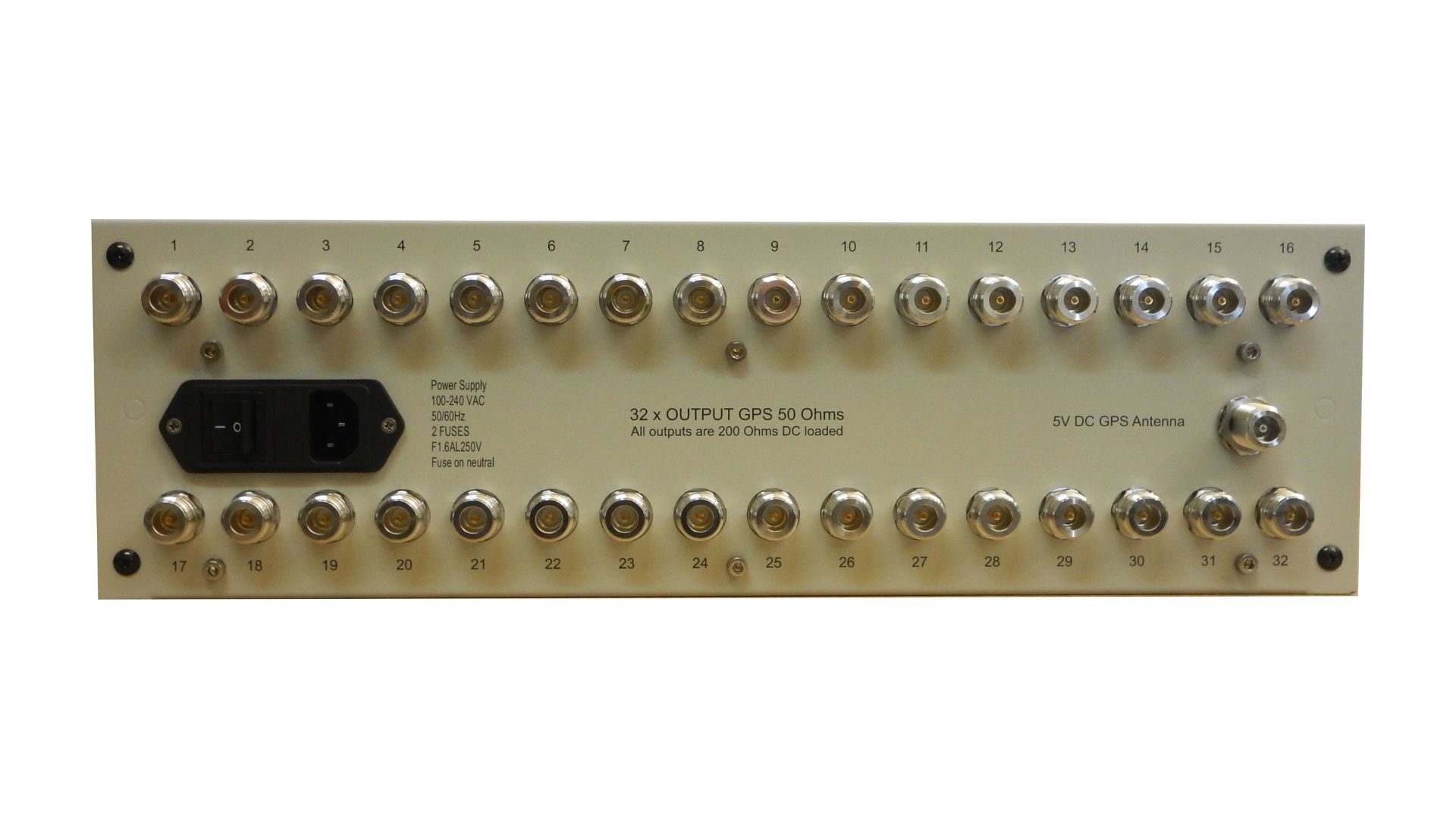
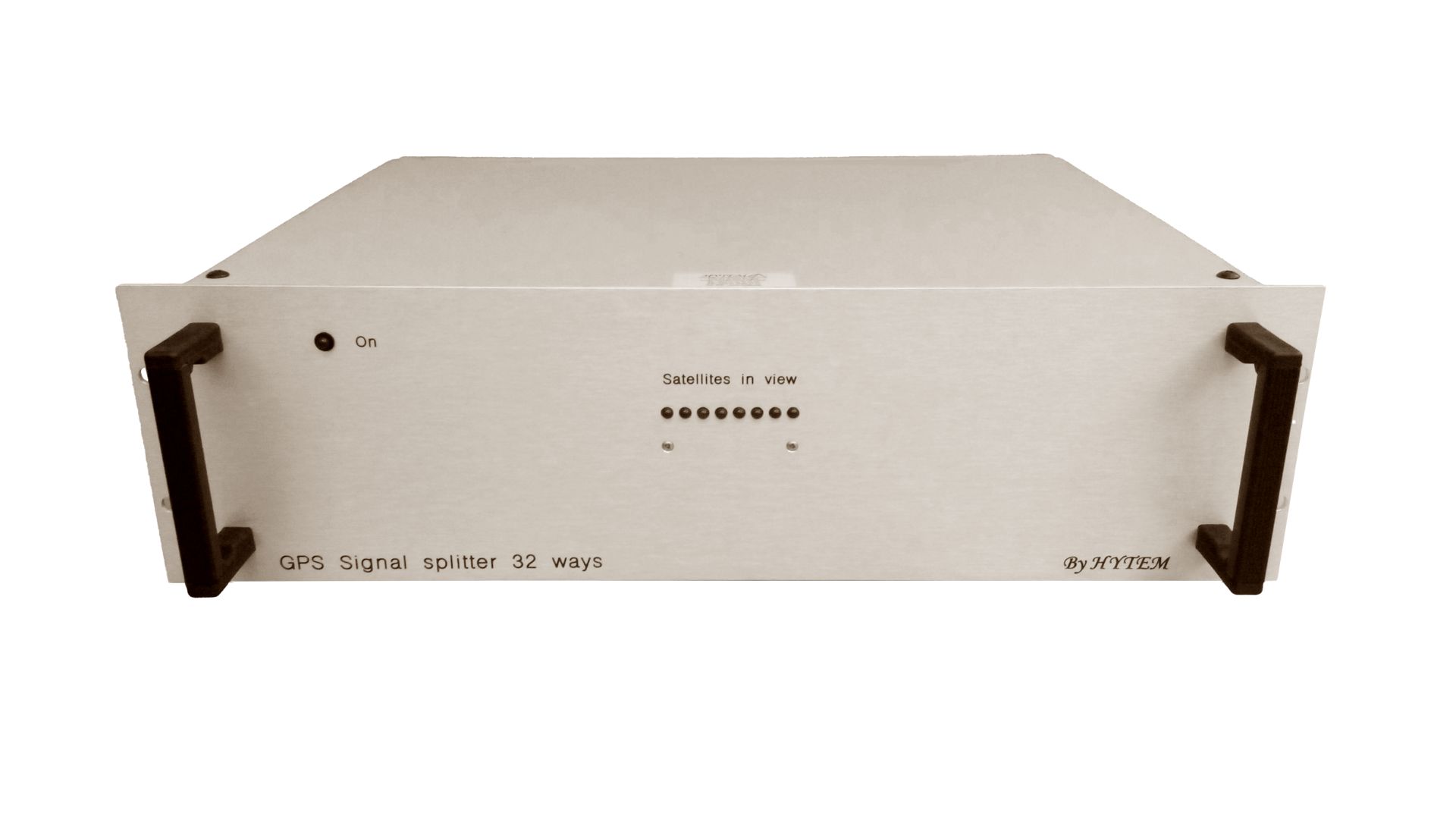
For test laboratories, HYTEM offers GPS / GNSS signal distribution systems.
GPS/GNSS Signal Distribution Systems
In many applications, a synchronized time base is essential to ensure accurate and reliable measurements. Thanks to its accuracy and robust encoding, the GPS / GNSS signal serves as an ideal time reference for demanding environments.
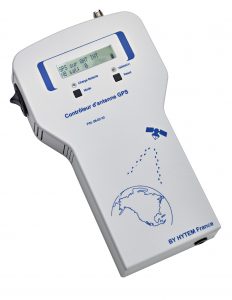
The HYTEM GPS/GNSS antenna controller 08.02.30 is a diagnostic tool designed to test and validate the correct operation of active GPS/GNSS antennas. It allows for evaluation of satellite reception and current consumption, ensuring the reliability of GPS/GNSS installations.
Compact and easy to use, the 08.02.30 GPS/GNSS antenna controller measures the antenna’s current consumption and verifies its satellite reception capability. The LCD screen displays real-time results, and a validation LED indicates the operational status of the installation. Ideal for laboratory or field testing.
Splitters
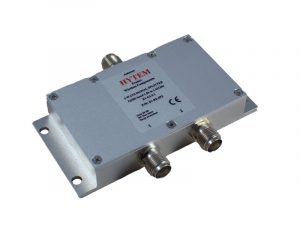
The HYTEM GNSS splitter 01.02.493 allows one GNSS antenna to be shared between two GPS–GNSS receivers by providing gain to compensate for signal splitting losses and coaxial cable lengths. It enables power to be supplied from one of the receivers to the antenna while simulating a load for the second receiver.
GPS/GNSS repeaters retransmit satellite signals within covered areas, providing an ideal solution for indoor testing or environments with limited signal reception.
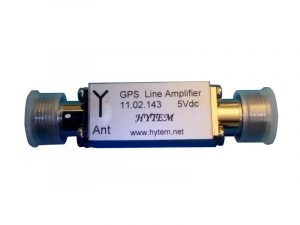
Designed to compensate for losses over long distances, the line amplifier ensures a stable and high-performance signal between antennas and receiving equipment.
The HYTEM 11.02.143 is a low-noise GPS line amplifier with a band-pass filter, designed to compensate for losses caused by long coaxial links. Compact and robust, it extends the distance between the GPS antenna and the synchronization equipment—depending on the cable used—up to 180 m (and up to 300 m with two amplifiers in cascade), while maintaining reliable signal reception even in the most demanding installations.